“I INVENT BIRDS THAT NO ONE HUNTS AND WOMEN THAT NO ONE IGNORES”
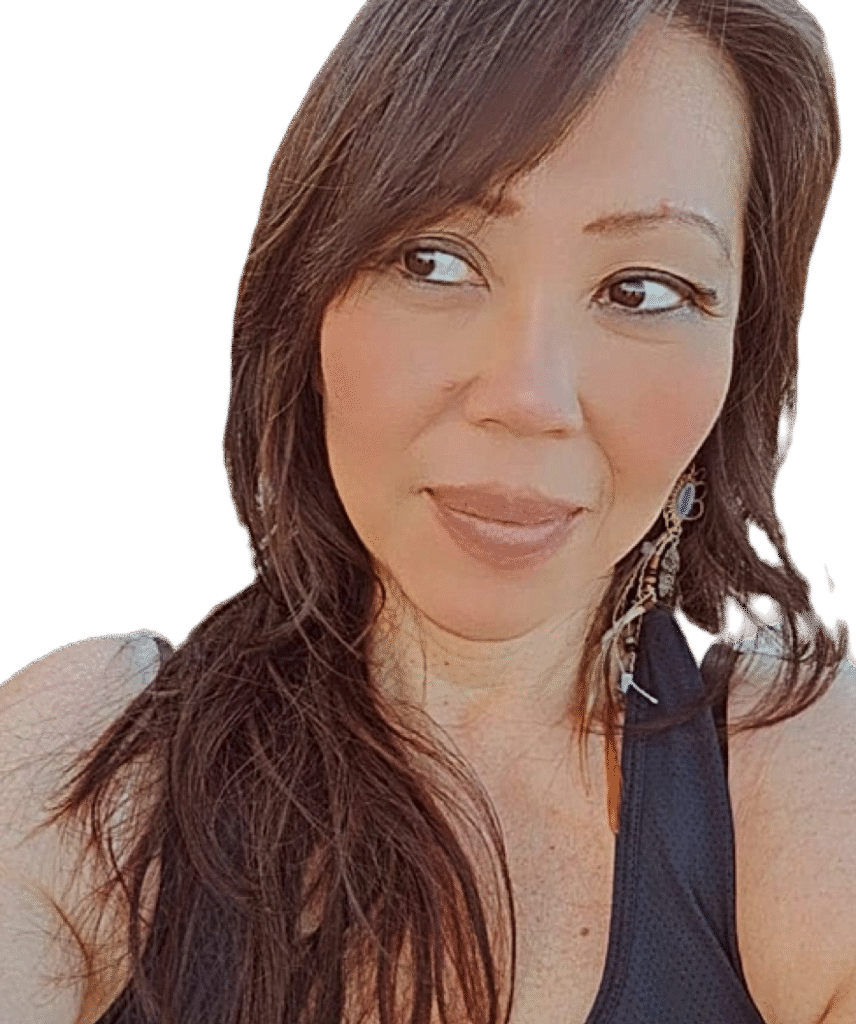
About the Artist
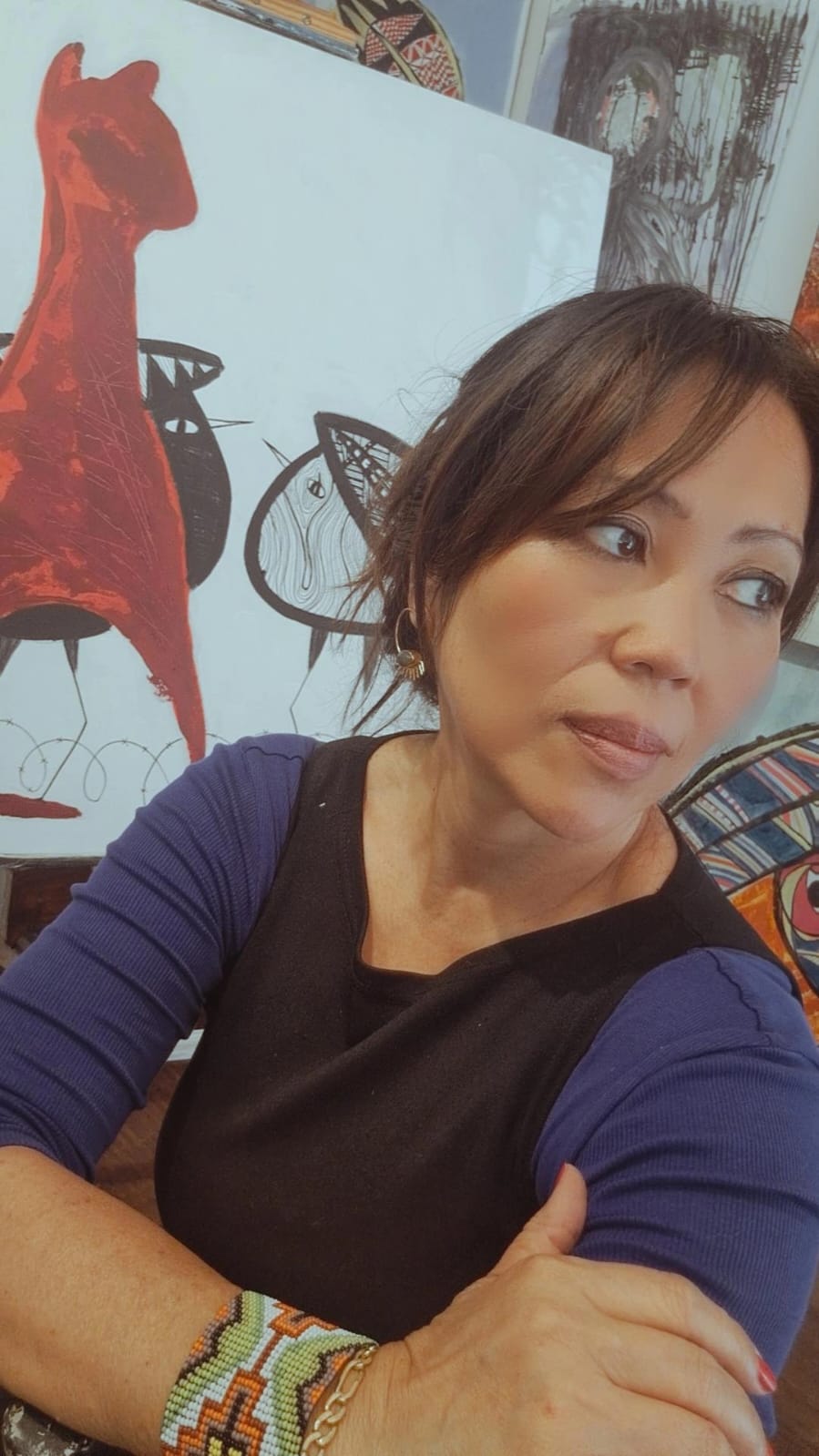
Born under the sky of São Paulo, with the wabi-sabi heritage of her Japanese grandparents whispering in her brushes, Jeane Satie found in Lebanon—through the eyes of Aisha, her daughter transplanted to the Beqaa Valley—the color missing from her palette: that of unrooted belonging.
Formally trained in Architecture and Urbanism at the Faculdade de Belas Artes de São Paulo, she constructs canvases where the components are:
- 5% controlled accidents (excesses of noise and paint drip like sap and interfere with the real image).
- 90% acrylic (her pulsating base).
- 5% poetic finds (feathers from the street birds of Beirut).
Although possessing a history of extreme overcoming, she remains “Happy, joyful, and strong,” like one of her favorite songs, in the “Mix of the World,” as she humorously calls Lebanon, a country that challenges her with its deep existential crises and embraces her with a “never leaves you in the comfort zone.”
SERIES THAT TELL HER STORY
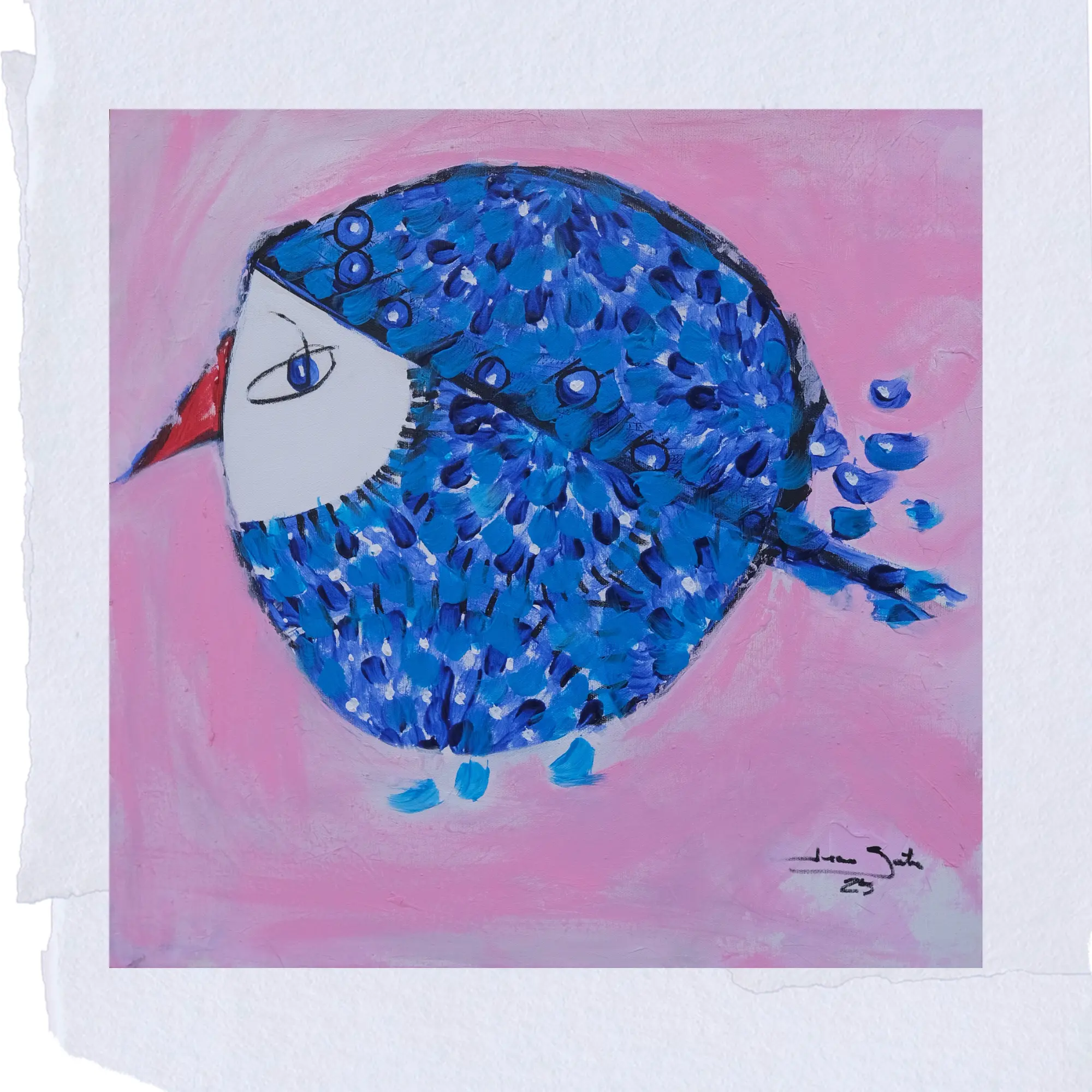
1. THE BEIRUT BIRDS (2020–TODAY)
- Evolution: From creatures (post-explosion) to messengers of resilience.
- Technique: Acrylic + real feathers glued + other random elements.
- Symbolism: Kite-birds that carry on their wings:
- References from Brazil (where Aisha was born).
- Traces of Japan (because DNA doesn’t deny).
- The texture of Lebanon (where they learned to rebuild together).
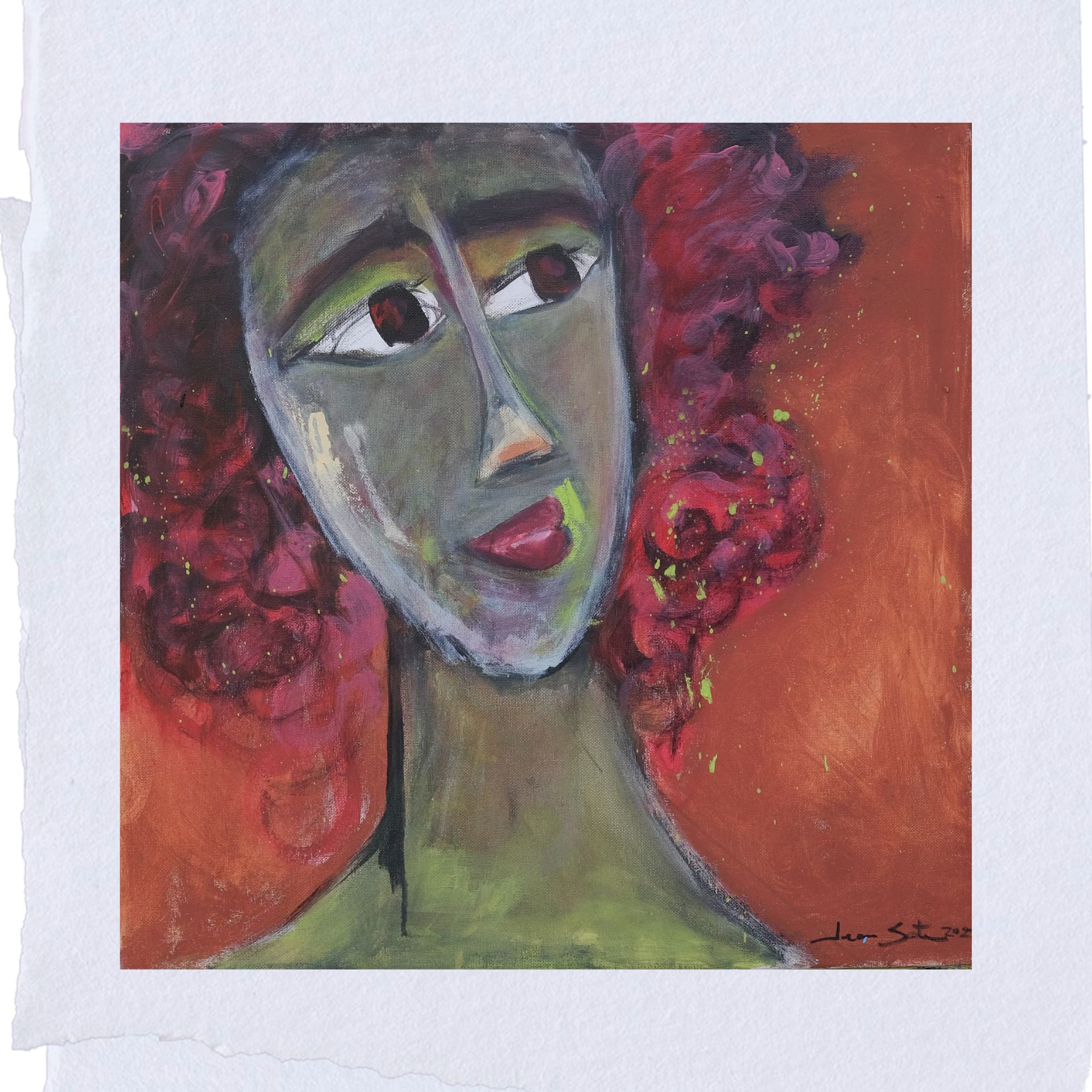
2. THE GODIVAS (2022–TODAY)
- Sketch-Women: Multicolored figures, happy in their essential nudity.
- “De-caricatured” faces (so that every woman sees herself).
- Absent bodies (like a dance or an escape?).
- Technique: Unique or mixed technique: Acrylic or Acrylic + eventual oil pastel (with contours that never close).
- Inspiration: Aisha entering adolescence and Jeane revisiting her own youth in São Paulo.
This page is a free translation from Portuguese — the language of memory, of crossing borders, and of love that travels across oceans.
(Jeane Satie)